
Baltimore continues to offer a range of opportunities for rental property owners, from traditional rowhouses and multifamily buildings to suburban homes across the surrounding counties. But the rental market is not the same in every neighborhood. Rent levels, property prices, renter preferences, and the type of housing available can vary significantly from one area to another.
For landlords and real estate investors, understanding these local differences can make it easier to evaluate a property, set a realistic rental price, and plan for long-term ownership. Rather than focusing only on average rent or popular neighborhoods, it helps to look at how rental prices compare with property costs and what kind of rental demand a particular home may attract.
This 2026 Baltimore rental market update explores current rent data, neighborhood-level differences, and important considerations for investors looking at Baltimore City and nearby communities.
Baltimore Rental Market Update: What the Numbers Show
Baltimore's rental market includes a wide range of property types and price points. Recent market sources report different average and median rents because they use different listing pools, property categories, and calculation methods. These figures are useful for understanding the general market, but they should not be treated as the expected rent for every property.
As of Oct 05, 2026, Zillow reported an average rent of $1,650 per month across all bedrooms and property types in Baltimore, with no year-over-year change in its reported average. Zillow also listed approximately 3,744 available rentals at the time of its update. [1]
Realtor.com reported a median rent of $1,695 per month for Baltimore in Oct 2026, up 1.19% year over year. Its market overview also showed approximately 2,432 rental properties listed, with the number of active rentals down 2.06% year over year. [2]
These figures offer a broad picture: Baltimore has rental homes across a wide price range, and the market can behave differently depending on the type and location of a property. For an owner, the practical question is not simply what the citywide average looks like. It is what similar homes in the immediate area are renting for, how long they are taking to lease, and what features renters are choosing.
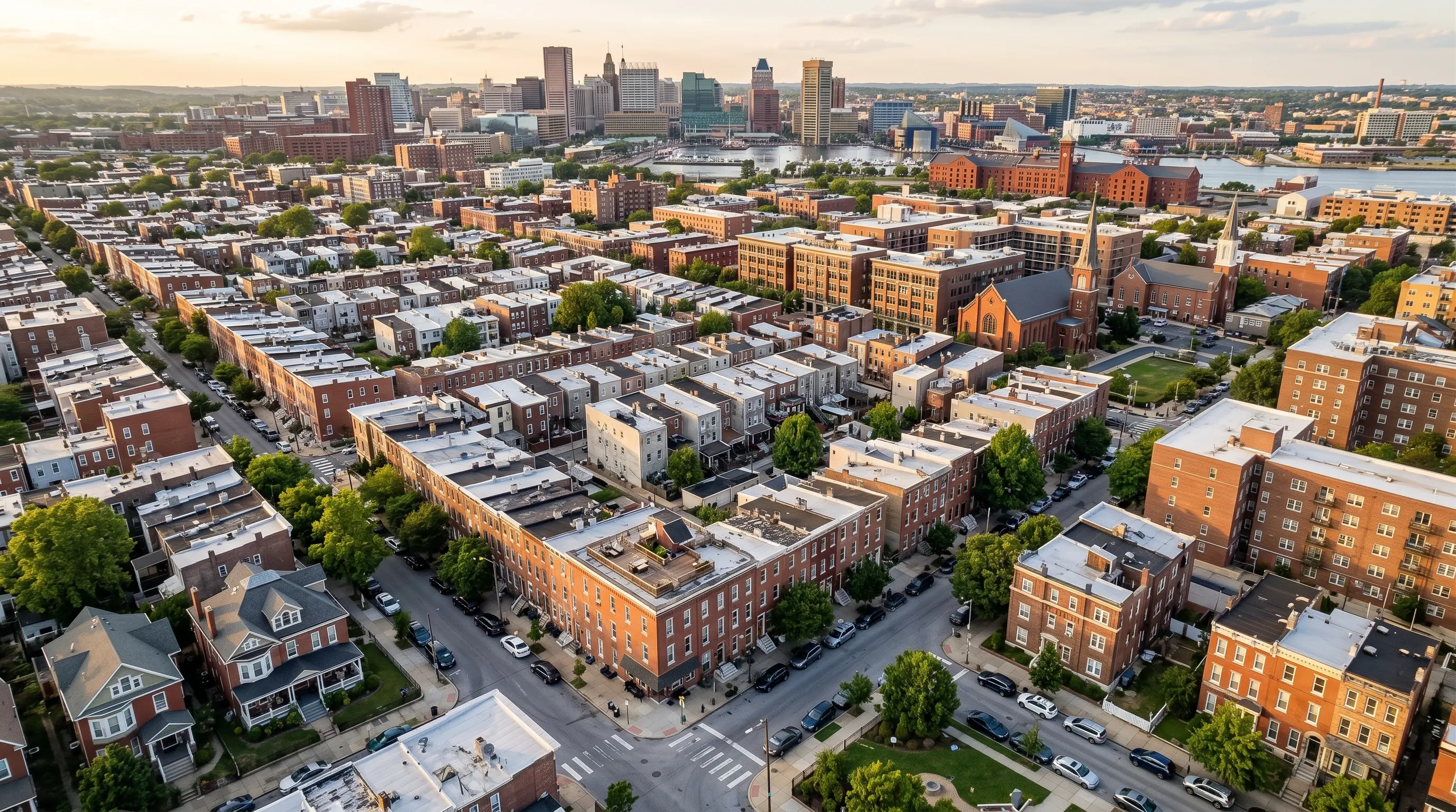
Average Rent by Neighborhood in Baltimore
One of the most important things to understand about Baltimore is how much rental prices can vary between neighborhoods. A home near major employment areas, waterfront attractions, universities, or popular retail districts may appeal to a different renter group than a property in a more residential neighborhood.
Realtor.com’s July 2026 neighborhood data showed the following median monthly rents across selected Baltimore areas.
| Baltimore area | Median monthly rent |
|---|---|
| Southeastern Baltimore | $2,195 |
| Southern Baltimore | $1,700 |
| Northern Baltimore | $1,669 |
| Northeastern Baltimore | $1,470 |
| Northwestern Baltimore | $1,400 |
| Central Baltimore | $1,625 |
| Western Baltimore | $1,575 |
| Eastern Baltimore | $1,762 |
| Southwestern Baltimore | $1,600 |
These figures are area-level medians, not guaranteed rental prices. A renovated three-bedroom rowhouse may attract a different rent than a smaller apartment in the same area. Property condition, parking, layout, utilities, and nearby amenities all influence how renters assess a home.
For example, Southeastern Baltimore had a reported median rent of $2,195, while Northwestern Baltimore had a median of $1,400 in the same data set. This difference illustrates why investors should compare properties within their relevant rental market rather than relying on a single citywide figure.
What Makes Neighborhoods Different?
A neighborhood's rental profile is shaped by more than its name or reputation. Access to public transportation, major roads, schools, healthcare facilities, shopping, parks, and employment centers can all influence renter interest. Housing type also matters: some areas have more apartments and smaller homes, while others have larger single-family properties or renovated rowhouses.
Investors should also consider the needs of the renters they hope to reach. A household looking for a long-term family home may prioritize bedrooms, storage, and outdoor space. A renter working in the city may place more value on commuting options and access to services.
Understanding these differences can help owners decide which property features to prioritize and how to position a rental when it is ready for the market.
Baltimore County Rental Market: Looking Beyond the City
Baltimore County provides another set of options for investors who are considering suburban rental properties. Communities such as Dundalk, Towson, Owings Mills, Catonsville, and Perry Hall have different housing types, price levels, and renter profiles.
Realtor.com reported a median rent of $2,100 per month for Baltimore County in September 2026, with a year-over-year increase of 2.79%. The same report showed a median listing price of $389,900 and 865 rental properties listed across the county.
Its city-level rental data showed median rents of approximately $2,000 in Dundalk, $2,292 in Towson, and $2,365 in Owings Mills. These are broad local indicators, and individual properties may rent for more or less depending on their features and location.
For investors, the surrounding county can offer a different balance of purchase price, potential rent, property size, and ongoing expenses. A suburban property may have more bedrooms or outdoor space, for example, but could also involve different maintenance needs, taxes, or travel time for an owner managing it independently.
Comparing Baltimore City with nearby county communities can help investors understand which property types and locations align with their budget and ownership plans.

Baltimore Investment Trends: Look Beyond Rental Income
Rental income is an important part of any investment, but it does not tell the whole story. A property with a higher advertised rent may also have a higher purchase price, greater operating costs, or more competition from similar rentals. A property with a lower monthly rent may still be worth investigating if its purchase and operating costs are proportionate.
Realtor.com reported that Baltimore’s median listing price was $229,900 in August 2026, down 7.30% year over year, while the median sold price was $264,990. Active listings were up 14.87% year over year, and median days on market were 48.
These figures provide context for buyers, but citywide listing and sold-price measures are not directly interchangeable. They also do not predict the price or performance of an individual investment property. Investors should review recent comparable sales and rental listings in the specific area they are considering.
A useful starting point is to estimate the property’s likely monthly income, then account for property taxes, insurance, vacancy, maintenance, utilities paid by the owner, management costs, and any financing expenses. This gives a more realistic view of the income that may remain after operating costs.
Investors should also consider how easily a property could appeal to future renters. Practical layouts, reliable access to everyday amenities, and features that suit local renter needs can matter as much as cosmetic upgrades.
How to Assess a Baltimore Neighborhood Before Buying
There is no single neighborhood that fits every investor. The right location depends on the property budget, preferred level of involvement, rental strategy, and willingness to manage different types of properties.
Before making an offer, compare several properties in the same area and with similar features. Look at current rental listings, recently leased properties where available, the number of competing rentals, and the condition of nearby housing. A handful of listings may not represent the entire market, so use a reasonable sample and check how closely each property matches the one you are evaluating.
It is also useful to visit the area at different times of day, where possible. Consider access to public transportation, road connections, grocery stores, parks, and other amenities relevant to likely renters. These observations can add context that online listing data may not show.
Finally, make sure your financial estimate includes a reserve for unexpected costs. A rental property should be assessed based on how it may perform under realistic conditions—not only on an optimistic rent estimate or a projected increase in property value.
Setting a Competitive Rental Price
Choosing a rental price is a balance between income expectations and the current options available to renters. Pricing too high may reduce inquiries and extend the time a property remains vacant. Pricing too low may leave potential income unrealized.
Start by reviewing comparable properties with a similar number of bedrooms, bathrooms, square footage, condition, and location. Pay attention to the features included in the rent, such as parking, laundry, appliances, outdoor space, and utilities. Asking rents can show what landlords are advertising, but they do not always reflect the final agreed rent.
A property’s presentation can also affect renter interest. Clear photographs, accurate descriptions, and convenient viewing arrangements help potential tenants understand what is being offered. Owners should review the response to a listing and be prepared to reassess the price or presentation if interest is limited.
The goal is not simply to advertise the highest possible rent. It is to find a realistic price that supports the property’s financial plan while remaining competitive with comparable homes.
How Local Property Management Helps Baltimore Landlords Make Better Decisions
Understanding Baltimore’s rental market is easier when you combine market data with local knowledge and practical property management experience. Rental prices can vary by neighborhood, property type, condition, and the features renters value, so using comparable properties to set a competitive rent is often more useful than relying on citywide averages alone.
PropertyWize helps Baltimore-area landlords make informed decisions by connecting local market understanding with professional rental management. From assessing rental potential and setting a competitive asking price to coordinating leasing, communicating with residents, and managing day-to-day operations, the right support can help owners make decisions based on their property’s needs and the local market—not just a general estimate.
If you’re unsure how your rental compares with similar properties, you can get a free rental analysis for your Baltimore property or learn more about how PropertyWize manages Baltimore rental properties for owners.
What Baltimore Landlords Should Watch in the Coming Months
Rental market conditions can change as new listings appear, leases expire, and renter preferences shift. Landlords should pay attention to the supply of similar homes in their area, the time those homes remain advertised, and changes in advertised rental prices.
It is also worth considering seasonal patterns. Some renters prefer to move during warmer months, while others need housing at different times of the year because of work, education, or family circumstances. These patterns can affect the timing of a vacancy, but they will not be identical for every property or neighborhood.
Rather than making decisions based on a single market update, owners can review comparable rental listings and local conditions whenever a lease is approaching renewal or a property is preparing to go on the market. This helps keep pricing decisions connected to current local conditions.
Make Your Baltimore Rental Strategy Property-Specific
Baltimore’s rental market is not one uniform market. City neighborhoods and surrounding county communities each have their own rental ranges, housing stock, and local conditions. The most useful market information is the information that closely matches the property an investor owns or plans to buy.
Whether you are considering your first rental home or reviewing an existing property, compare local rent levels with realistic operating costs, assess the features renters may value, and avoid relying on citywide averages alone.
If you want to understand how your rental property fits into the Baltimore market, PropertyWize can help you review its rental potential and management needs.
Schedule Your Free Rental Analysis →
You can also explore PropertyWize’s Baltimore property management services to learn more about leasing, rent collection, tenant communication, and maintenance coordination.
Frequently Asked Questions
Which Baltimore neighborhoods have higher rental prices?
Realtor.com’s July 2026 data showed higher median rents in Southeastern Baltimore and Southern Baltimore than in some other broad city areas. However, rental prices vary by property type, size, condition, and exact location, so these figures should be treated as general market indicators rather than guaranteed rent levels.
Is Baltimore County part of the Baltimore rental market?
Yes. Baltimore County is an important part of the broader Baltimore-area rental market. Communities such as Dundalk, Towson, and Owings Mills have their own rental profiles, and their rent levels and property prices can differ from those in Baltimore City.
How do I know if a Baltimore rental property is a good investment?
Start by comparing the likely rent with the full cost of ownership. Include taxes, insurance, maintenance, vacancy, management, utilities paid by the owner, and financing expenses where applicable. Review similar rental properties and recent sales in the same area, then consider whether the property fits your investment goals and risk tolerance.
Should I use citywide average rent to price my rental?
Citywide average rent is useful for understanding the broad market, but it is not a reliable stand-alone pricing method. Compare properties with similar size, layout, condition, and location. Review active listings and, when available, recently leased comparables before setting the rent.
Are rental prices the same across Baltimore City and Baltimore County?
No. Rental prices vary between Baltimore City neighborhoods and Baltimore County communities. Property type, size, amenities, and local conditions all contribute to those differences. Investors should evaluate the specific area and property rather than assuming one market figure applies throughout the region.
How often should landlords review rental market conditions?
It can be useful to review local rental conditions before listing a vacant property and when preparing for a lease renewal. Regularly checking comparable properties can help landlords make informed decisions about pricing, property presentation, and rental strategy.
Can a property management company help assess rental potential?
A property management company familiar with the local market may help owners review comparable rentals, prepare a property for leasing, set a competitive asking rent, and manage leasing and tenant communication. Ask what is included in the company’s rental analysis and management services.